Tokenized Stocks Explained: Do You Own Shares or Just Tokens?
Tokenized stocks look and feel like real shares, but the fine print reveals very different ownership rights.
 coinbeat.news
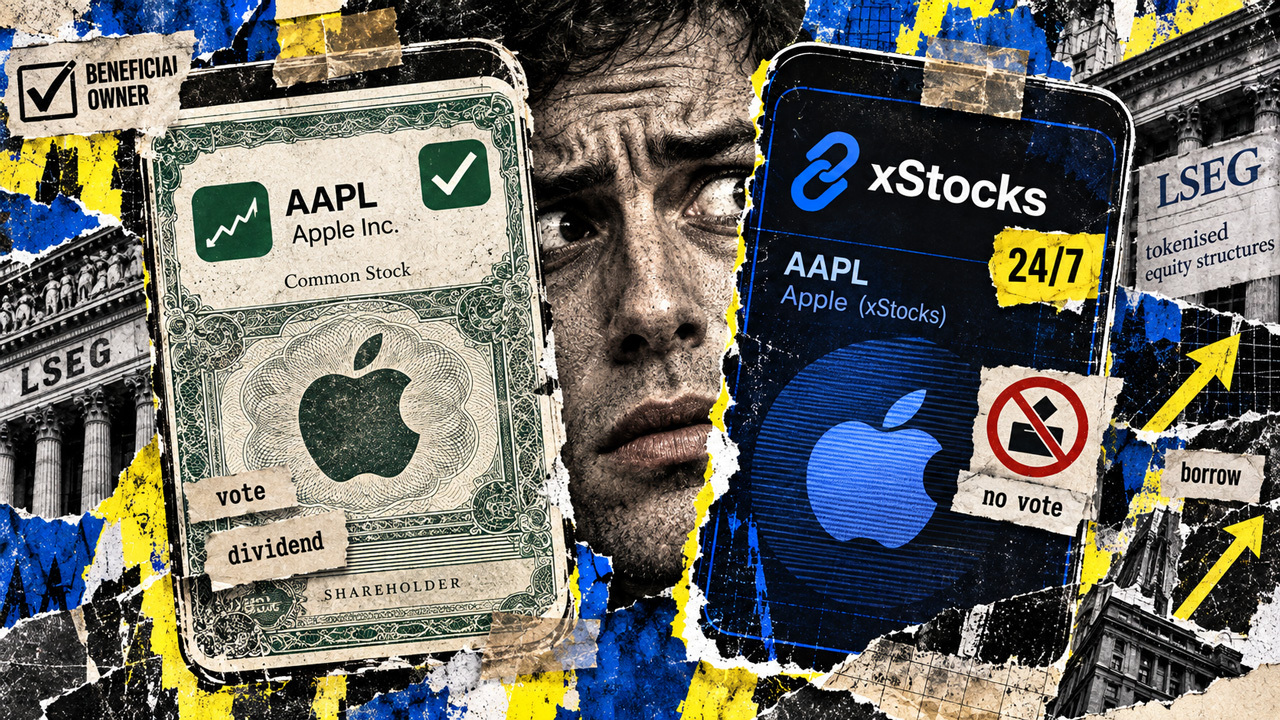
Crypto traders love new products, and tokenized stocks are grabbing attention for offering cheap access to traditional equities. Buying them on a digital app feels just like purchasing shares on a standard brokerage platform. The interface shows familiar company tickers and buy buttons, but the underlying legal contract is often completely different.
Traditional shares give buyers direct ownership interests, voting rights, and cash dividends. When a third party issues a token that simply tracks a stock price, the buyer usually misses out on those direct corporate privileges. For example, some products adjust token balances automatically to reflect dividends instead of paying cash, and they rarely include voting rights in the underlying company.
Traditional institutions are already looking at ways to bridge this gap properly. The London Stock Exchange is exploring blockchain technology to issue shares while preserving actual shareholder rights. Major players like Kraken also issue tokenized equity products, making sure to clarify that holders get economic exposure without formal shareholder status.
Traders need to check the fine print before buying tokenized equities. Knowing whether you hold the actual asset or just a tracking instrument will prevent surprises during corporate vote events or dividend payouts. Watch for upcoming regulatory decisions and exchange rollouts as traditional finance and blockchain continue to merge.
Market sentiment
Be the first to react
▍Comments (0)
No comments yet. Start the conversation!